╔═ Photos
[ map ]47.5021°N 11.1019°E
╔═ Names
Scientific nameArmillaria mellea
Common namesHoney fungus
also known asArmillariella mellea
╔═ Nomenclature
Accepted nameArmillaria mellea(Vahl) P. Kumm., 1871
BasionymAgaricus melleusVahl, 1790
all names (37)
Variations
Armillaria melleasubsp.mellea(Vahl) P. Kumm., 1871
Armillaria melleavar.albidaF.W. Patt. & V.K. Charles, 1915
Armillaria melleavar.bulbosaP. Karst., 1879
Armillaria melleavar.mellea(Vahl) P. Kumm., 1871
Armillaria melleaf.mellea(Vahl) P. Kumm., 1871
Other names
Agaricites melleus(Vahl) Mesch., 1895
Armillariella mellea(Vahl) P. Karst., 1881
Clitocybe mellea(Vahl) Ricken, 1914
Lepiota mellea(Vahl) J.E. Lange, 1915
Mastoleucomyces melleus(Vahl) Kuntze, 1891
Omphalia mellea(Vahl) Quél., 1886
Polymyces melleus(Vahl) Earle, 1909
Agaricus fuscopallidusBolton, 1790
Agaricus melleusvar.fuscopallidus(Bolton) Schulzer, 1870
Agaricus versicolorWith., 1796
Armillaria melleaf.sabulicolaA. Ortega & G. Moreno, 2010
Armillaria melleasubsp.nipponicaJ.Y. Cha & Igarashi, 1995
Armillaria melleavar.exannulataPeck, 1894
Armillaria melleavar.flavaGillet, 1874
Armillaria melleavar.glabraGillet, 1874
Armillaria melleavar.javanicaHenn., 1899
Armillaria melleavar.maximaBarla, 1887
Armillaria melleavar.minorBarla, 1887
Armillaria melleavar.nipponica(J.Y. Cha & Igarashi) Blanco-Dios, 2017
Armillaria melleavar.radicataPeck, 1891
Armillaria melleavar.sulfureaWeinm. ex P. Karst., 1879
Armillaria melleavar.versicolor(With.) W.G. Sm., 1908
Armillaria melleavar.viridiflavaBarla, 1887
Armillariella melleaf.giganteaWichanský, 1963
Armillariella melleavar.olivaceaRick, 1937
Armillariella olivacea(Rick) Singer, 1956
Armillariella puiggariif.olivacea(Rick) Singer, 1954
Fungus versicolor(With.) Kuntze, 1898
Geophila versicolor(With.) Quél., 1888
Stropharia versicolor(With.) Fr., 1887

Names, authorship and dates from Index Fungorum.

╔═ Classification
  • BasidiomycotaPhylum
  • └─ AgaricomycetesClass
  • └─ AgaricalesOrder
  • └─ PhysalacriaceaeFamily
  • └─ ArmillariaGenus

Higher ranks from Catalogue of Life (COL26.9 XR).
╔═ Morphology
╔═ Ecology

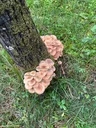
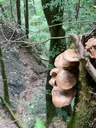
At the base of living and dead trees, stumps and roots of broadleaves and conifers

╔═ Foraging status
Species protectionNo species-specific restriction under federal law
Red List (Germany)nb — Not assessed

⚠ Before you pickWild fungi may be taken in small quantities for your own use (§39(3) BNatSchG) — but not in nature reserves or national parks, on closed land or on farmland in use, and never for sale (§39(4)). In Bavaria this right is anchored in Art. 141(3) of the state constitution and is limited to locally customary amounts; the competent authority is the district nature-conservation authority (untere Naturschutzbehörde). Local signs and ordinances come first.

Species protection from BArtSchV Annex 1 and §2(1), retrieved 2026-10-15; Red List from Dämmrich et al. (2016) (BfN / Rote-Liste-Zentrum). Not legal advice — local rules and signage may be stricter. BArtSchV Annex 1 · Red List data

╔═ Edibility

Edible only after thorough cooking; some people are intolerant to it

╔═ Key Features
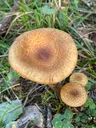
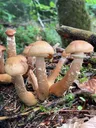
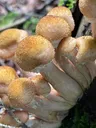
  • ▸ Honey-coloured to olive-brown caps growing in dense clusters at the base of trees
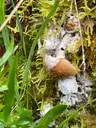
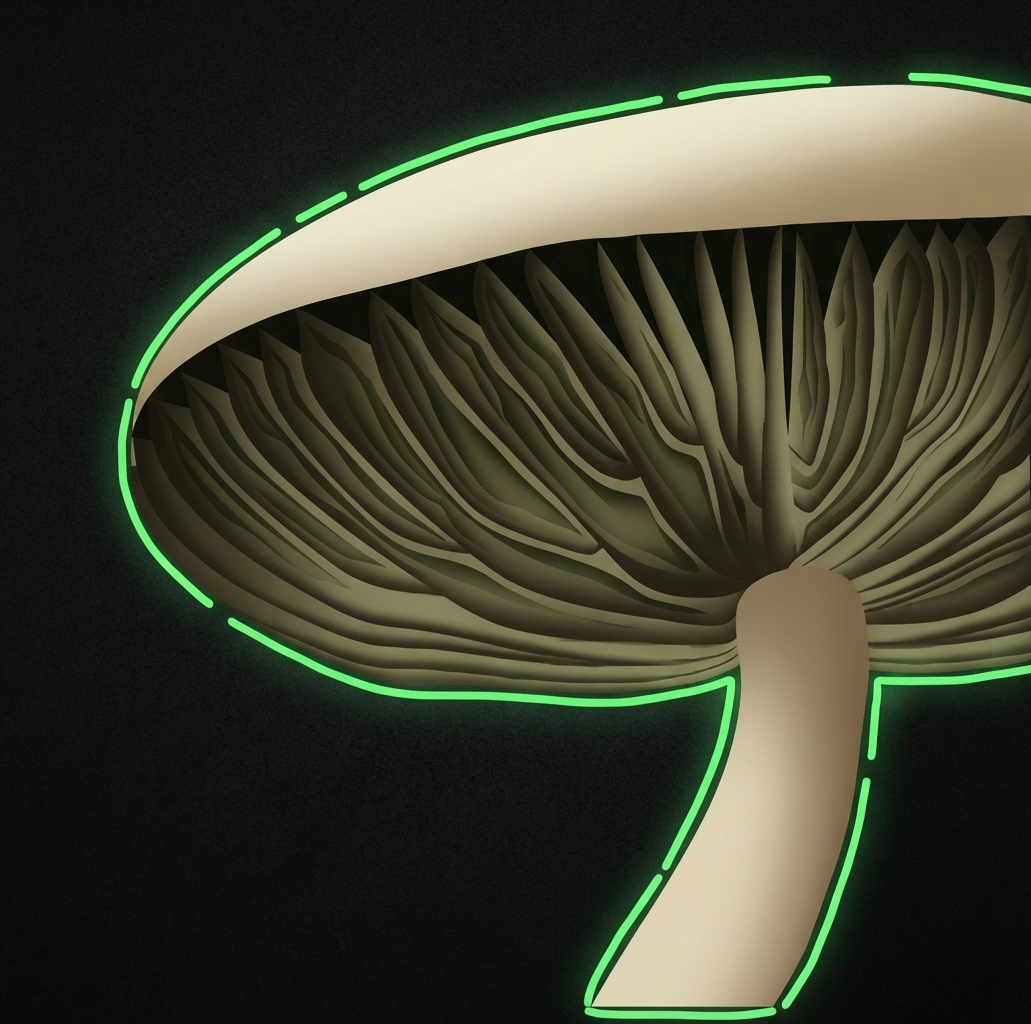
  • ▸ White to cream decurrent gills
  • ▸ Zigzag ring or ring zone on the upper stem
  • ▸ Dark, dense scales in the middle of the cap
╔═ Notes

A weakly parasitic fungus whose black, bootlace-like rhizomorphs spread through the soil and can kill trees — the mycelium of a single colony can rank among the largest living organisms on Earth.