Names marked with * are literal translations of the scientific name; no established common name exists.
all names (3)
Names, authorship and dates from Index Fungorum.
- AscomycotaPhylum
- └─ SordariomycetesClass
- └─ OphiocordycipitaceaeFamily
- └─ TolypocladiumGenus
Higher ranks from Catalogue of Life (COL26.9 XR).
not recorded
In mossy spruce and fir woodland, parasitic on buried truffles (Elaphomyces), late summer to autumn
⚠ Before you pickWild fungi may be taken in small quantities for your own use (§39(3) BNatSchG) — but not in nature reserves or national parks, on closed land or on farmland in use, and never for sale (§39(4)). In Bavaria this right is anchored in Art. 141(3) of the state constitution and is limited to locally customary amounts; the competent authority is the district nature-conservation authority (untere Naturschutzbehörde). Local signs and ordinances come first.
Species protection from BArtSchV Annex 1 and §2(1), retrieved 2026-10-15; Red List from Dämmrich et al. (2016) (BfN / Rote-Liste-Zentrum). Not legal advice — local rules and signage may be stricter. BArtSchV Annex 1 · Red List data
not recorded
Inedible — a small, uncommon parasite without culinary interest
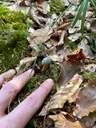
- ▸ Slender, club- to spindle-shaped, pale yellowish-brown fruit body, often tipped with a paler point
- ▸ Rises from buried deer truffles (Elaphomyces), on which it is parasitic
- ▸ Smooth, matte surface, only a few centimetres tall, singly or in small groups
- ▸ In mossy conifer forest, growing out of the ground litter rather than from wood
A member of the truffleclub genus, parasitic on underground Elaphomyces ("deer truffles") and easily overlooked among moss. The epithet longisegmentatum refers to the long, multisegmented part-spores — hence the literal translation of the name.
This page draws its species data from Wikidata.